Long before the bindi became a fashion accessory, it was a sacred symbol.
For centuries, the bindi has represented spirituality, strength, and cultural identity in Indian tradition. Even today, despite modern trends and evolving styles, its deeper meaning continues to resonate.
At Shingar, we believe that understanding the cultural significance of the bindi makes wearing it even more powerful.
Because a bindi is not just decoration — it is heritage.
The Origin of the Bindi
The word “bindi” comes from the Sanskrit word bindu, meaning “point” or “drop.” In ancient Indian philosophy, the bindu represents the cosmic center of creation — the origin of energy.
Traditionally placed between the eyebrows, this point is believed to be the “Ajna Chakra” — the center of intuition and wisdom.
The red dot symbolized:
• Spiritual awakening
• Inner strength
• Prosperity
• Protection
Over time, this sacred symbol became an everyday part of Indian identity.
The Red Bindi and Its Traditional Significance
Historically, the red bindi was worn by married Hindu women as a symbol of marital harmony and commitment.
The color red represents:
• Power
• Love
• Fertility
• Auspicious beginnings
It is why the red bindi remains central in weddings, religious ceremonies, and festivals even today.
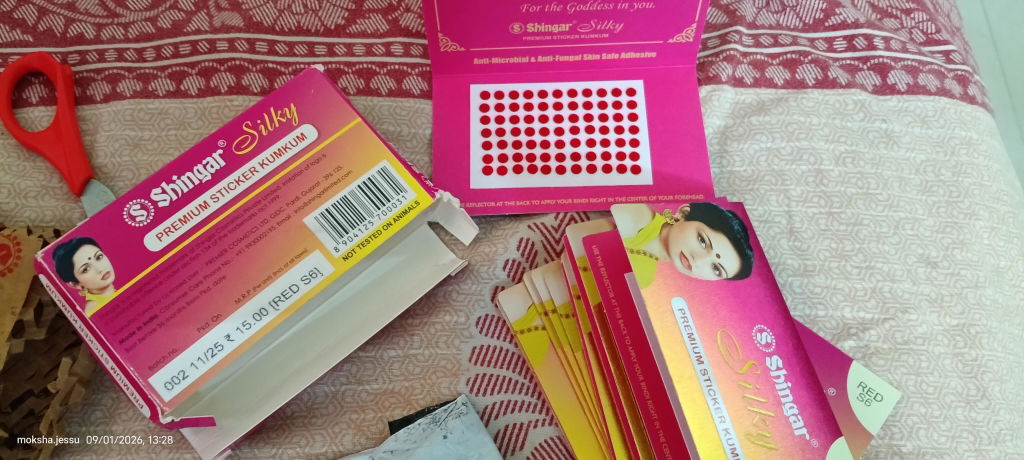
Shingar’s classic red bindis honor this tradition while offering refined, modern finishes suited for today’s women.
Bindi Beyond Marriage – A Symbol of Identity
Although traditionally associated with marriage, bindis are worn today by women of all ages — married and unmarried alike.
In modern India, the bindi represents:
• Cultural pride
• Feminine strength
• Personal style
• Connection to roots
Young professionals, students, brides, and homemakers all embrace the bindi in their own way.
It has evolved — but it has not lost meaning.
Evolution from Sacred Symbol to Fashion Statement
The journey of the bindi reflects the journey of Indian women — rooted yet evolving.
From simple kumkum dots applied by hand, bindis transformed into:
• Velvet stick-on designs
• Stone-studded festive styles
• Designer geometric shapes
• Bridal statement pieces
While styles changed, the placement remained the same — honoring its spiritual center.
Shingar has carefully evolved with this journey, offering designs that respect tradition while embracing contemporary aesthetics.
Bindis in Festivals and Rituals
During festivals like Diwali, Navratri, Karva Chauth, and weddings, the bindi plays an essential role in completing traditional attire.
It symbolizes:
• Auspicious energy
• Celebration
• Devotion
• Grace
A festive look feels incomplete without a bindi that harmonizes with attire and jewelry.
Shingar’s festive and bridal collections are inspired by these very traditions.
The Modern Woman and the Bindi
Today’s Indian woman confidently blends tradition with modernity.
She may wear a bindi with a saree at a family function — and pair a tiny matte black dot with an Indo-western outfit at work.
The bindi has become an expression of identity rather than a rule.
It is worn by choice, not obligation.
And that choice reflects empowerment.
Preserving Tradition with Quality and Care
While trends evolve, quality remains essential.
Shingar bindis are:
• Skin-friendly and safe
• Designed for long-lasting wear
• Inspired by traditional symbolism
• Crafted for modern comfort
Every design respects the cultural significance of the bindi while ensuring it suits contemporary lifestyles.
Honoring the Past, Embracing the Present
The bindi is more than a beauty accessory.
It is a bridge between generations.
It carries history, spirituality, celebration, and identity — all in a single point placed with intention.
When you wear a bindi, you carry forward centuries of tradition while expressing your individuality.
Explore Shingar’s bindi collection and choose a design that reflects both your heritage and your personal style.
Because tradition deserves to shine — beautifully and confidently.